

















Section 1: Introduction
1.1 Overview and Governing Body
Triathlon became an Olympic sport at the 2000 Sydney Games. The sport is governed by World Triathlon (formerly the International Triathlon Union / ITU, rebranded in 2020) under the World Triathlon Competition Rules. Triathlon combines swimming, cycling, and running in continuous sequence, with athletes transitioning between disciplines without stopping. The sport tests endurance, speed, technical skill, and tactical awareness across three fundamentally different athletic domains.
1.2 Olympic Events and Distances
- Individual Olympic Distance: 1500 m swim, 40 km bike, 10 km run. Both men's and women's events.
- Mixed Relay (added Tokyo 2020): Teams of 4 (2 men + 2 women), each completing a super-sprint leg: 300 m swim, 7.4 km bike, 2 km run. Athletes alternate in a fixed order (woman–man–woman–man).
- Sprint Distance (World Triathlon Series): 750 m swim, 20 km bike, 5 km run. Not currently an Olympic event but used in World Triathlon Championship Series qualification.
1.3 Draft-Legal vs. Non-Drafting
A critical distinction in triathlon competition rules is the drafting policy on the bike leg. Olympic and World Triathlon events are draft-legal, meaning athletes may ride in packs and benefit from aerodynamic slipstreaming, similar to road cycling. This transforms the bike leg into a tactical group race. In contrast, long-distance events (Ironman, Challenge) use non-drafting rules with a 12 m draft zone, making the bike leg an individual time trial. This fundamental difference shapes equipment rules, race strategy, and athlete profiles.
Section 2: Equipment
2.1 Bicycle
- Frame geometry: Standard road bicycle with traditional diamond frame. In draft-legal races, no time-trial or triathlon-specific frames are permitted. Seat tube angle and handlebar position must conform to UCI road geometry standards.
- Handlebars: In draft-legal races (Olympic, World Triathlon), clip-on aero bars, extensions, and triathlon-specific handlebars are prohibited. Drop handlebars with standard brake levers required. In non-drafting races, aero bars are permitted.
- Wheels: Standard road wheels. Disc wheels may be restricted in draft-legal races at the Technical Delegate's discretion (crosswind safety). Wheel diameter: 622 mm (700c) or 559 mm (26 in).
- Minimum weight: No minimum weight requirement (UCI's 6.8 kg minimum does not apply to triathlon).
- Mechanical condition: Bikes must pass a pre-race mechanical inspection. No loose components, broken spokes, or unsafe modifications.
2.2 Wetsuit
Wetsuit rules are based on water temperature measured at a depth of 60 cm, taken 1 hour before the race start:
- Mandatory: Water temperature below 16°C (60.8°F) for Olympic distance; below 14°C (57.2°F) for sprint distance.
- Optional: Between 16–20°C (60.8–68°F) for Olympic distance; between 14–20°C for sprint.
- Prohibited: Above 20°C (68°F) for Olympic distance; above 22°C (71.6°F) for sprint distance.
- Thickness: Maximum 5 mm at any point. Total coverage must not include gloves, shoes, or full-face coverage.
- Swim cancelled: If water temperature falls below 12°C (53.6°F) or exceeds 32°C (89.6°F), the swim may be shortened or replaced with a run segment (duathlon format).
2.3 Helmet
- CPSC, CE EN 1078, or equivalent-certified bicycle helmet mandatory.
- Helmet must be buckled and secured before the athlete touches or unracks the bicycle in T1.
- Helmet must remain buckled until after the athlete has racked the bicycle in T2.
- Violation of helmet rules results in a time penalty or disqualification.
2.4 Race Numbers and Timing
- Race number: Worn on the front during the run segment and on the back during the bike segment. Race belt permitted for easy switching.
- Timing chip: Ankle-mounted transponder provided by the organiser. Must be worn throughout the entire race. Timing mats at swim exit, T1 entry/exit, T2 entry/exit, and finish line record split times.
Section 3: Playing Area
3.1 Swim Course
- Distance: 1500 m (0.93 mi) for Olympic distance; 750 m for sprint; 300 m for mixed relay super-sprint.
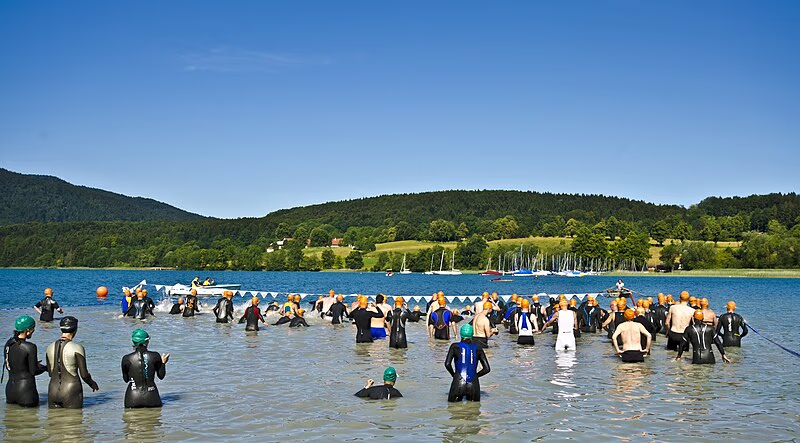
- Venue: Open water — lake, river, ocean, or harbour. Purpose-built pools are not used for World Triathlon or Olympic events.
- Course layout: Marked by large coloured buoys at turning points. Typically a single- or double-loop rectangular or triangular course. Direction of turns clearly indicated.
- Water temperature measurement: Taken at 60 cm depth at the swim course centre, 1 hour before the scheduled start.
3.2 Bike Course
- Distance: 40 km (24.9 mi) for Olympic distance; 20 km for sprint; 7.4 km for mixed relay.
- Layout: Typically a multi-lap circuit on closed public roads. Laps are usually 5–10 km each, providing spectator access and logistical control.
- Road surface: Paved roads required. Technical Delegate inspects for potholes, grates, sharp turns, and unsafe camber.
- Mount and dismount lines: Painted lines at T1 exit and T2 entry. Athletes must be off the bike before crossing the dismount line and may only mount the bike after crossing the mount line.
3.3 Run Course
- Distance: 10 km (6.2 mi) for Olympic distance; 5 km for sprint; 2 km for mixed relay.
- Layout: Multi-lap circuit on paved surfaces. Aid stations every 2.5 km providing water, sponges, and electrolyte drinks.
- Finish line: Clearly marked with timing mat, camera, and finish tape. Athletes must complete the entire course on foot (running or walking).
3.4 Transition Areas
- Transition 1 (T1): Swim-to-bike. Located between the swim exit and the bike mount line. Individually numbered racks where athletes store their bike and equipment.
- Transition 2 (T2): Bike-to-run. Located between the bike dismount line and the run course start. Athletes rack their bike, remove helmet, change shoes.
- Transition rules: Athletes must use only their designated rack position. No assistance from coaches, team members, or spectators. Equipment must remain within the athlete's designated area. Timing mats record transition times.
Section 4: Players & Officials
4.1 Competitors
- Individual events: Up to 55 athletes per gender at the Olympic Games. Qualification based on World Triathlon rankings and continental quota places.
- Mixed Relay: Teams of 4 (2 men + 2 women) from the same nation. Up to 16 teams at the Olympics.
- Start format: Mass start (pontoon dive start) for individual events. Wave starts may be used for safety in large fields. Relay legs start from a tag zone upon teammate's arrival.
4.2 Technical Officials
- Technical Delegate (TD): Appointed by World Triathlon. Oversees course approval, equipment checks, and overall competition rules compliance.
- Race Referee: On-course authority for penalty decisions and disqualifications.
- Transition Officials: Monitor transition areas for rule compliance (racking, helmet, equipment placement).
- Bike Course Marshals: Motorcycle-mounted officials who observe drafting, dangerous riding, and course compliance on the bike leg.
- Swim Safety: Kayakers, jet ski operators, and lifeguards positioned along the swim course. Responsible for athlete rescue and monitoring swimmers in distress.
- Penalty Box Officials: Manage the penalty box on the run course where time penalties are served.
4.3 Timing
Electronic chip timing using ankle-mounted transponders. Timing mats at swim exit, T1 in/out, T2 in/out, bike lap splits, run lap splits, and finish line. All split times are publicly displayed and recorded for official results.
Section 5: Rules of Play
5.1 Swim Segment
- Stroke: Any stroke permitted (freestyle/front crawl is universal due to speed advantage).
- Prohibited aids: No pull buoys, paddles, snorkels, fins, or flotation devices.
- Resting: Athletes may rest by treading water, floating, or holding a stationary object (kayak, buoy, dock) but may not make forward progress while doing so.
- Wetsuit stripping: Wetsuits may be removed in the swim-to-T1 corridor. Athletes may not receive assistance with wetsuit removal.
5.2 Bike Segment
- Draft-legal racing: At Olympic and World Triathlon events, athletes may ride in packs and draft behind other riders. No aero bars permitted.
- Non-drafting events: In non-drafting races (age-group, long-distance), a drafting zone of 12 m extends behind the lead edge of the front wheel. Athletes entering this zone must pass within 25 seconds or drop back.
- Mounting/dismounting: Athletes must be off the bike before the dismount line and may only mount after the mount line. Running with the bike in hand is permitted between these lines.
- Course conduct: Athletes must obey all course directional markers. Cutting corners, crossing centre lines, or riding on sidewalks results in penalties.
5.3 Run Segment
- Locomotion: Athletes must run or walk. Crawling is prohibited. Bare feet are permitted but strongly discouraged.
- No headphones: Earphones, headphones, or any audio device is prohibited during competition.
- No outside assistance: Athletes may not receive physical assistance from non-participants. Aid station supplies and official medical assistance are the only permitted help.
- Aid stations: Located every 2.5 km, providing water, electrolyte drinks, and sponges. Athletes must discard cups/sponges in designated litter zones.
5.4 Mixed Relay Format
Teams of 2 women and 2 men. The relay order is woman–man–woman–man. Each athlete completes a super-sprint leg (300 m swim, 7.4 km bike, 2 km run). The tag is made in a designated tag zone: the incoming athlete must physically enter the zone before the next athlete may start. The race is intense and typically lasts under 75 minutes total.
Section 6: Scoring
6.1 Individual Events
The total elapsed time from start to finish determines the ranking: Swim Time + T1 Time + Bike Time + T2 Time + Run Time = Total Time. The first athlete to cross the finish line wins. There is no separate scoring for individual segments — transitions are included in the total time and are a competitive element.
6.2 Mixed Relay
The combined team time from the start of the first athlete to the finish of the fourth athlete determines the ranking. Each athlete's individual leg time includes their swim, T1, bike, T2, run, and the tag-zone handover period.
6.3 World Triathlon Rankings
Athletes accumulate ranking points based on finishing position at World Triathlon Championship Series events and World Cups. Rankings determine Olympic qualification quotas and start positions. Points are awarded on a descending scale (e.g., 1000 points for 1st, 800 for 2nd, etc.) with multipliers for championship-level events.
6.4 Tiebreaking
If two athletes record identical total times (to 1/100th of a second), photo-finish technology determines the higher placement. If still indistinguishable, athletes share the position and both receive the higher rank.
Section 7: Violations & Penalties
7.1 Time Penalties
Most infractions result in a stop-and-go time penalty served at a penalty box (typically located on the run course):
- 15-second penalty (Sprint/Olympic): Drafting violation (non-drafting races), littering outside designated zones, mounting/dismounting in wrong zone, minor transition violations.
- Served at penalty box: The athlete must enter the penalty box and wait the designated time before continuing. Failure to serve a penalty results in disqualification.
7.2 Disqualification Offences
- Outside assistance: Receiving physical assistance from spectators, coaches, or non-officials.
- Unsportsmanlike conduct: Verbal abuse of officials, deliberate interference with another athlete.
- Helmet violation: Racing with an unbuckled helmet, or unracking the bike before buckling.
- Course cutting: Failing to complete the full marked course for any segment.
- Equipment fraud: Using prohibited equipment (aero bars in draft-legal, motors, etc.).
- Two yellow cards: Two time penalties in the same race escalates to DSQ on the third infraction.
7.3 Protest and Appeals
Athletes or team managers may protest a penalty decision within 15 minutes of the result being posted. A protest fee (refunded if the protest is upheld) is required. The Jury of Appeal reviews video evidence and makes a final, binding decision. Protests regarding course conditions or timing errors may also be filed.
Section 8: Safety Considerations
8.1 Swim Safety
- Safety craft: Kayakers, jet ski operators, and lifeguards positioned at regular intervals along the swim course. Ratio: minimum 1 safety craft per 25 athletes.
- Distress protocol: Athletes in distress should raise an arm and wave to attract attention. Safety craft extract the athlete. Assisted athletes are automatically withdrawn from the race.
- Water quality: Water quality tests conducted 24–48 hours before the event. E. coli levels must meet WHO recreational water standards. Swim segment cancelled if contamination thresholds are exceeded.
- Current and tide: In ocean or river venues, current speed and direction are assessed. Course layout adjusted to minimise dangerous conditions.
8.2 Bike Safety
- Motorcycle marshals: Officials on motorcycles monitor the bike course for crashes, mechanical breakdowns, and rule compliance.
- Lead and follow vehicles: A lead vehicle precedes the race leader, and a follow vehicle trails the last athlete. Medical motorcycles carry first-response equipment.
- Road closures: The entire bike course must be closed to non-race traffic. Course barriers, marshals, and police manage intersections.
- Mechanical assistance: Athletes may perform self-repairs but may not receive mechanical assistance. Wheel changes from neutral support are permitted at designated locations.
8.3 Run Safety and Medical
- Aid stations: Water, electrolyte drinks, and sponges available every 2.5 km. In hot conditions (WBGT above 28°C), additional cooling stations with ice and misting are provided.
- Medical team: Paramedics and physicians at the finish line, transition areas, and key course points. Ambulance on standby with hospital route pre-planned.
- Heat policy: Competition may be modified (shortened distances, additional aid stations, earlier start times) or cancelled when the Wet Bulb Globe Temperature (WBGT) exceeds 32.2°C (90°F).
- Collapse protocol: Athletes who collapse near or at the finish line are attended to immediately. Rectal temperature measurement is the gold standard for diagnosing exertional heat stroke. Cold water immersion tubs are positioned at the finish area for rapid cooling.