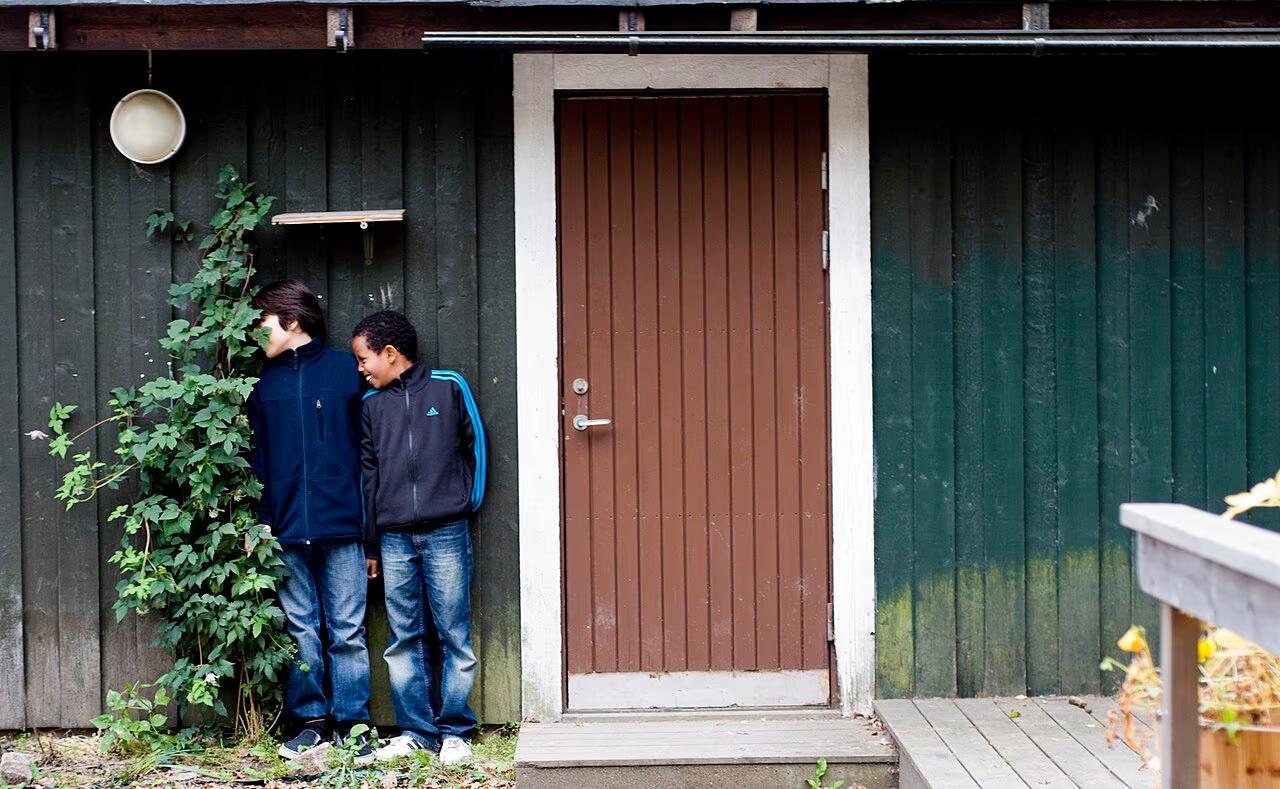
Section 1: Introduction
Hide and Seek is a classic children's game played around the world. It combines elements of stealth, strategy, and excitement as players attempt to hide from or find others. The game's simplicity and adaptability have made it a timeless activity enjoyed across generations and cultures.
Section 2: Equipment
Hide and Seek requires minimal equipment:
- No specialized equipment required
- Optional: timer or stopwatch for timed rounds
- Optional: boundaries markers (cones, chalk, or natural landmarks)
Section 3: Playing Area
The game can be played in various environments:
- Indoor: A house, building, or defined indoor space with multiple hiding spots
- Outdoor: A yard, park, playground, or other outdoor area with natural hiding places
- Clear boundaries should be established before play begins
- A designated "home base" or "safe zone" is required (often a tree, pole, wall, or other landmark)
Safety considerations for the playing area:
- Area should be free of dangerous hazards
- Boundaries should keep players within safe, supervised areas
- Off-limits areas should be clearly defined (e.g., roads, water features, private property)
Section 4: Players/Officials
Hide and Seek is flexible in terms of participants:
- Minimum: 2 players (1 seeker, 1 hider)
- Optimal: 4-10 players
- No officials required; players self-regulate
Player roles:
- Seeker: Counts to a predetermined number while others hide, then searches for hidden players
- Hiders: Find hiding spots while the seeker counts, attempting to remain undiscovered
Section 5: Rules of Play
Basic Gameplay
- One player is designated as the "seeker" (often through a selection method like drawing straws, counting out, or volunteering)
- The seeker closes their eyes or faces a wall at the designated home base and counts aloud to a predetermined number (typically 20-100, depending on the size of the playing area)
- While counting, other players hide within the established boundaries
- After counting, the seeker calls out "Ready or not, here I come!" and begins searching for hidden players
- When the seeker finds a hidden player, that player is "caught" and joins the seeker at home base
- The game continues until all players are found or a time limit is reached
Variations
Traditional Hide and Seek
- First player found becomes the seeker in the next round
- Last player found wins the round and earns the right to hide in the next round
Sardines
- One player hides while all others count
- Seekers search individually
- When a seeker finds the hidden player, they quietly join them in the hiding spot
- Game continues until all players are hiding together in the same spot
- Last player to find the group becomes the hider in the next round
Home Base Hide and Seek
- Hidden players can "free" themselves by running to home base without being tagged by the seeker
- Seeker must tag players before they reach home base
- First player caught becomes the next seeker
Section 6: Scoring
Hide and Seek typically doesn't use a formal scoring system, but common victory conditions include:
- Last player found wins the round
- Players who reach home base without being caught win the round
- For competitive play, points can be awarded based on:
- Time hidden without being found
- Successfully reaching home base
- Finding all hidden players quickly (for seekers)
Section 7: Violations/Penalties
Common Violations
- Peeking: Seeker looking before counting is complete
- Out of Bounds: Hiding outside the designated play area
- Moving: Changing hiding spots after the seeker has finished counting
- Unfair Hiding: Hiding in dangerous or prohibited locations
Penalties
- Peeking: Restart counting, often with additional time added
- Out of Bounds: Automatic "found" status
- Moving: Automatic "found" status if observed by seeker
- Unfair Hiding: Disqualification from round
Section 8: Safety Considerations
- Establish clear boundaries and off-limits areas before play begins
- Ensure all hiding places are physically safe (no locked spaces, dangerous heights, etc.)
- For younger players, adult supervision is recommended
- Establish a signal (whistle, call) to immediately end the game if necessary
- In outdoor settings, be aware of environmental hazards (traffic, water, wildlife)
- For night games, ensure adequate visibility or provide flashlights