








Section 1: Introduction
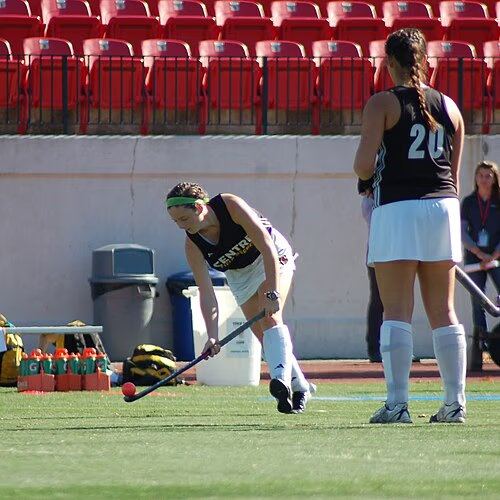
NCAA Field Hockey is the collegiate variant of women's field hockey contested in the fall semester at NCAA Division I, II, and III. Play is governed by the International Hockey Federation (FIH) Rules of Hockey (Rule 1, Nature and Venue of the Game) as adapted for NCAA competition through the annually published Division I Field Hockey Rules Modifications. The NCAA Field Hockey Championship is contested in mid-November. NCAA Field Hockey is exclusively a women's sport at the NCAA level.
The current edition incorporating this rulebook is the 2026 Division I Field Hockey Rules Modifications, effective for the fall 2026 season. The headline change for 2026 is a revised overtime format for NCAA Tournament competition — a single 15-minute sudden-victory period followed, if necessary, by a shootout — along with a rules-committee point of emphasis directing officials toward consistent timing of penalty corners. Both changes are detailed in Section 5 (Rules of Play) below; all other provisions carried forward from the FIH/NCAA baseline are unchanged from the prior edition.
Section 2: Equipment
- Stick (Rule 4, The Stick): J-shaped, max length 105 cm, max weight 737 g, made of wood/composite; only the flat side may be used to play the ball
- Ball (Rule 5, The Ball): hard, spherical, 22.4 cm circumference, 156-163 g, white with raised seams
- Goalkeeper equipment (Rule 3, Players' Clothing and Equipment): NOCSAE-approved helmet with face mask, throat protector, chest protector, padded gloves, padded leggings, kickers (overshoes), and a goalie stick distinct from the field stick
- Field player: optional shin guards, mouthguard recommended by FIH but mandatory under NCAA modifications, goggles permitted/encouraged for safety, gloves permitted
- Goal frame (Rule 7, The Goals): 3.66 m wide × 2.14 m high × 1.22 m deep, with backboard (siding) 460 mm high
Section 3: Playing Area
- Field (Rule 6, The Field of Play): 91.40 m long × 55 m wide (FIH spec); NCAA may use slightly smaller fields
- Surface: water-based artificial turf preferred (FIH spec); some NCAA venues use sand-based turf or natural grass
- Two 22.90-m lines (originally "25-yard line"); one halfway line (Rule 6)
- Shooting circle: 14.63-m radius from each goal (Rule 7, The Goals)
- Penalty corner mark: 9.14 m from goal posts (Rule 12, Penalty Corner)
- Penalty stroke mark: 6.40 m in front of goal (Rule 13, Penalty Stroke)
- Goal frame backed by goal-mouth area (Rule 7)
Section 4: Players & Officials
- 11 players per team on field including 1 goalkeeper (Rule 2, Composition of Teams)
- Roster: typically 16-22 players for NCAA D1; up to 18 may be in match-day squad
- Substitutions: unlimited and rolling (Rule 2 framework as modified by NCAA — distinct from FIFA limited subs); player exits, substitute enters at the 22.90-m line
- Officials: 2 umpires, plus 1 reserve umpire at championship-level matches
- Video review: NCAA framework permits video review of designated reviewable plays at championship matches (goals, penalty corners, cards)
- 2026 point of emphasis: per the 2026 Division I Field Hockey Rules Modifications, the rules committees have directed on-field officials to apply consistent timing when penalty corners are taken, so that both teams are afforded the same setup and execution window on every corner
- Goalkeeper substitution: brief stoppage, additional padded protection allowed during transition
Section 5: Rules of Play
- Match (Rule 8, Start and Restart of Play): 4 quarters of 15 minutes each (FIH format adopted from 2014 onward; NCAA aligns)
- 2-minute breaks between Q1/Q2 and Q3/Q4; 5-10 minute halftime
- Overtime — updated for 2026: under the 2026 Division I Field Hockey Rules Modifications, an NCAA Tournament match tied at the end of regulation proceeds to a single 15-minute sudden-victory overtime period played 11 v. 11; the first team to score wins immediately. This replaces the previous multi-period golden-goal overtime format.
- Shootout — updated for 2026: if the score remains tied after the 15-minute sudden-victory period, the match is decided by a shootout. A coin toss gives one team the choice to attack or defend; five players per team take alternating one-on-one attempts against the opposing goalkeeper. If the shootout remains tied after the first series of five, a "Sudden Victory" shootout procedure continues, one attempt per team per round, until a winner is decided.
- Stick play (Rule 9, Conduct of Play): ball played only with the flat side of the stick; raised hits forbidden except in the shooting circle
- Self-pass (Rule 9): a free hit may be played to oneself
- Penalty corner (Rule 12, Penalty Corner): defenders behind the goal line, attackers outside the circle until the ball is played; high hits prohibited (ball must stay below the 460 mm backboard height) for the first shot; see Section 4 for the 2026 officiating point of emphasis on consistent penalty-corner timing
- Penalty stroke (Rule 13, Penalty Stroke): 1-on-1 shot from the 6.40 m mark, awarded when a defender commits a foul in the circle that prevents a probable goal
Section 6: Scoring
- Goal (Rule 9, Conduct of Play): the ball must wholly cross the goal line between the posts, propelled from inside the shooting circle by an attacking player's stick
- A shot originating from outside the circle does not count as a goal
- The team with the most goals at the end of regulation — or, in NCAA Tournament play, after the 15-minute sudden-victory overtime or shootout described in Section 5 — wins the match
Section 7: Violations & Penalties
- Common fouls (Rule 9, Conduct of Play): obstruction, dangerous play, third-party block, playing the ball with the rounded side of the stick, foot kick, raised hit outside the circle
- Card framework: green card (warning, possible 2-minute temporary suspension), yellow card (5-10 minute suspension to the penalty box; team plays short), red card (full ejection; team plays short for the remainder of the match)
- Penalty corner (Rule 12) awarded for fouls committed in the shooting circle by defenders
- Penalty stroke (Rule 13) awarded for serious fouls inside the shooting circle that prevent a probable goal
- NCAA-specific suspension framework applies for accumulated cards across a match or season
Section 8: Safety Considerations
Mandatory mouthguard use is required at the NCAA level. Goggles are strongly recommended given the incidence of stick-strike eye injuries. Goalkeeper full padded equipment is mandatory under Rule 3 (Players' Clothing and Equipment). Concussion protocol requires removal from play plus graduated return-to-play assessment for any actual or suspected concussion, since head/face strikes from stick or ball are primary risks in this sport. Penalty-corner safety is reinforced by the requirement that the ball stay below backboard height (460 mm) on the first shot, reducing high-velocity head-strike risk — a rule whose consistent application is reinforced by the 2026 officiating point of emphasis on penalty-corner timing described in Section 4. WBGT-based heat thresholds and lightning-detection protocols halt outdoor play when triggered. NCAA sports-medicine policy requires a certified athletic trainer at every match, with a team physician and EMT present at championship-level competition, along with AED access and an emergency action plan at every venue.


