


🏛️Official — FIA
Loading OpenSourceSports…
Motor Sports
1–2 players
outdoor
car, track
10 essential rules
The FIA Formula 1 Technical Regulations (Section C of the 2026 FIA F1 Regulations) define the design, construction, and homologation rules for every F1 car. Unlike the Sporting Regulations (which govern race procedure, qualifying, penalties on track), the Technical Regulations govern what teams c...
Active aerodynamics: driver-operable wing-flap actuators (front + rear) — Z-mode for cornering downforce, X-mode for straight-line drag reduction; Ground-effect Venturi underfloor retained from 2022-onward regulations; DRS (Drag Reduction System) replaced by the active rear-wing element
Composite chassis must pass FIA crash tests (front impact, side intrusion, rear impact, rollover); Power unit elements limited per season (penalties for exceeding allocation — covered in Sporting Regulations)
1.6 L V6 turbocharged ICE retained; MGU-H removed; MGU-K output tripled; 50/50 ICE-to-electric split (target ~750 kW combined peak power); Energy deployment limits: 4 MJ per lap from MGU-K (up from 2 MJ)
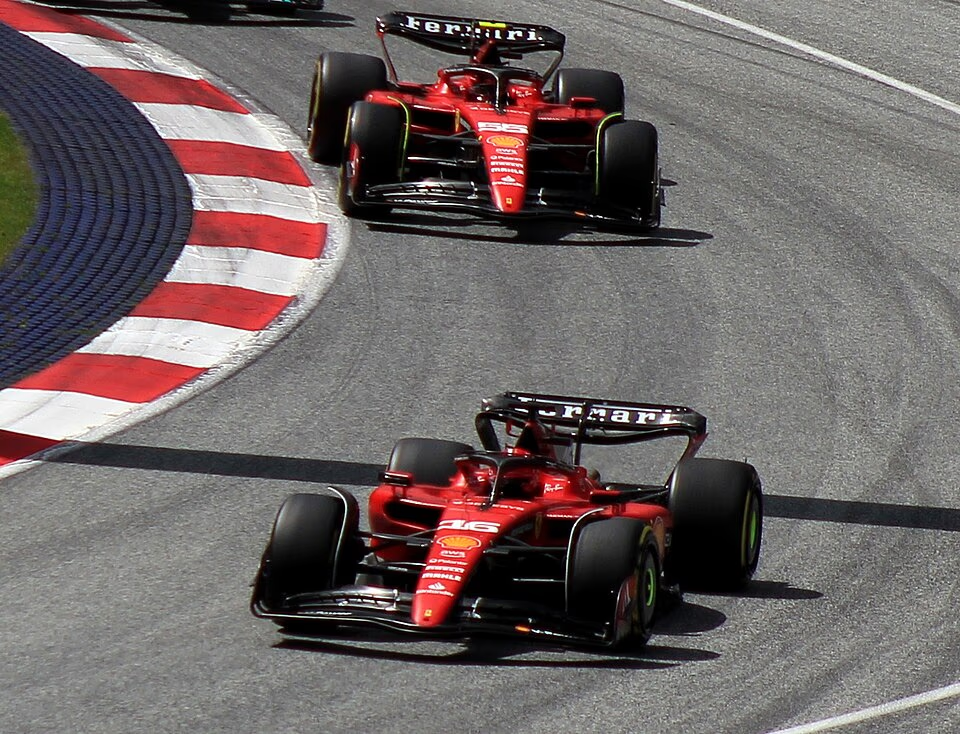
Chassis: single-seat open-cockpit monocoque with halo cockpit protection device; Minimum weight (car + driver, no fuel): 768 kg for 2026 (down from 798 kg); Maximum dimensions: 1900 mm wide (down from 2000 mm), 3400 mm wheelbase (down from 3600 mm), 950 mm overall height
FIA Grade 1 circuits only (homologation required); 23+ circuits on the 2026 calendar; Pit lane speed limit: 80 km/h (race), enforced by car-side limiter; Track-edge kerbs, sausage kerbs, and run-off areas defined per circuit homologation
10 constructor teams × 2 cars = 20 drivers on the 2026 grid; Each car: 1 driver, plus reserve driver entitlement per team; FIA officials enforce Technical Regulations: Technical Delegate, scrutineers, technical commissioners
1.6 L V6 turbocharged ICE retained; MGU-H removed; MGU-K output tripled; 50/50 ICE-to-electric split (target ~750 kW combined peak power); Energy deployment limits: 4 MJ per lap from MGU-K (up from 2 MJ)
The Technical Regulations do not govern race scoring (handled by the Sporting Regulations: 25-18-15-12-10-8-6-4-2-1 for P1–P10, plus 1 bonus point for fastest lap in top 10). Technical scrutineering produces a binary pass/fail outcome — non-compliant cars are excluded from the session results.
Failed scrutineering: car may be excluded from session/race results (e.g., underweight, plank wear excess, fuel sample non-conformance); Power unit allocation exceeded: grid penalties (10 places per additional element); Parc fermé violation: pit-lane start required
Mandatory halo cockpit protection (since 2018) — must pass 116 kN static load test. Carbon-fibre monocoque survival cell with anti-intrusion panels and impact-absorbing nose.
Ready to dive deeper?