
Submission Grappling (ONE Championship)·Combat Sports
ONE Championship

🏛️Official — ONE Championship
Loading OpenSourceSports…
Super fight: 10 minutes (single period); Title fight: 12 minutes (single period); If tied: judge decision (no overtime golden-score)
Why people argue about this
People often assume that if a match goes into overtime (beyond 10 or 12 minutes), it's decided by judges rather than extended time. But actually, in Submission Grappling under ONE Championship rules, matches go to overtime and continue until one competitor taps out (submits) or the referee declares a winner due to exhaustion or injury, regardless of how long they've been going.
All joint locks (arms + legs); All chokes; Heel hooks fully legal at all weight classes (atomic-grappling-style permissive ruleset)
Why people argue about this
People often assume that heel hooks are only legal in lower weight classes due to their controversial nature, but they're actually permitted across all weight divisions at ONE Championship under submission grappling rulesets, including atomic-grappling-style permissive rule sets. This leads to confusion about where and when heel hooks can be used legally.
Pulling guard is permitted (not penalized as in ADCC); ONE values active offense from any position; Stalling is penalized regardless of position
Why people argue about this
People often assume pulling guard is strictly prohibited in Submission Grappling (ONE Championship) due to its presence in ADCC, but the official stance clarifies it's actually allowed and won't be penalized as harshly as in ADCC, highlighting ONE’s emphasis on active offense from any position.
No-gi only: rashguard + shorts (or grappling pants); rashguard must cover torso; Mouthguard recommended; protective cup permitted (men); No shoes, no jewelry, nails trimmed, hair tied back
Why people argue about this
People often assume that since submission grappling doesn't allow gi attire, they can wear regular streetwear gear like sneakers. But in reality, shoes are strictly prohibited as they could interfere with submissions or cause injury to the opponent.
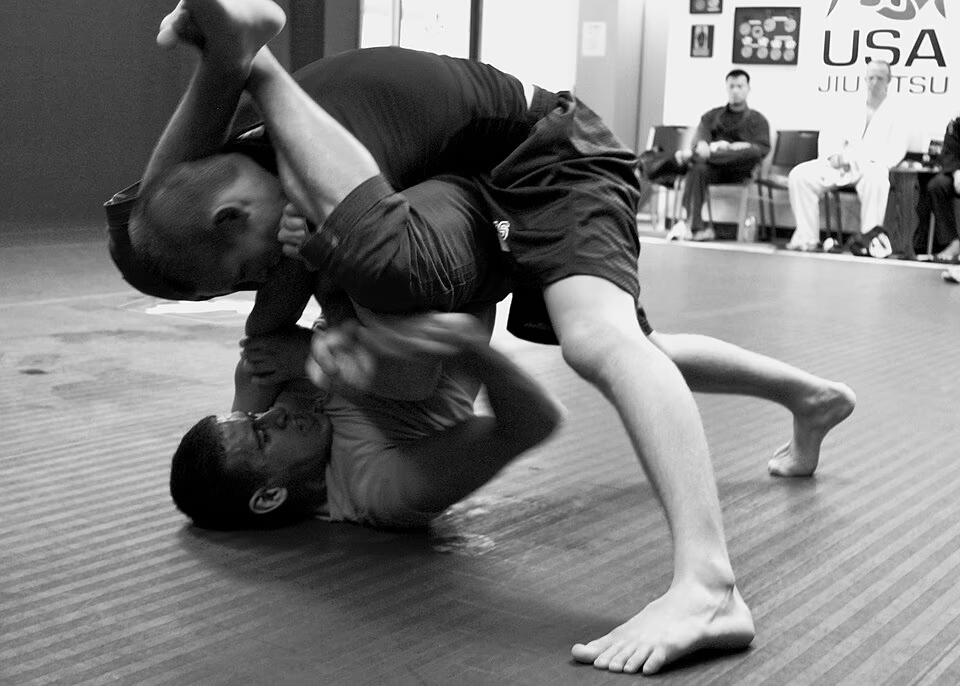
ONE's circular open-floor mat (no cage, no ropes) — same surface used for MMA events with the cage panels removed; ~8m diameter padded mat; Multiple parallel mats not used — single-mat broadcast format
Why people argue about this
People often assume that submission grappling matches in ONE Championship are contained within a cage like MMA fights, which leads them to misunderstand how they're actually set up. The official verdict clarifies that these matches use an open circular mat with no cage panels, but many newcomers think the lack of visible barriers means fighters can roam free around the entire ring perimeter.
Two competitors per match (super-fight or title-fight format); Weight classes follow ONE's MMA-aligned schedule: Atomweight, Strawweight, Flyweight, Bantamweight, Featherweight, Lightweight, Welterweight, Middleweight, Light Heavyweight, Heavyweight; Officials: 1 mat referee + 3 judges + medical ...
Why people argue about this
People often assume that since there are three judges in a Submission Grappling match, they must each score differently on every aspect of the fight, which leads to confusion about how their scores contribute to the final result. Actually, the judges' scores are averaged together and compared against the mat referee's decision to determine the winner.
Super fight: 10 minutes (single period); Title fight: 12 minutes (single period); If tied: judge decision (no overtime golden-score)
Why people argue about this
People often assume pulling guard in Submission Grappling (ONE Championship) is strictly prohibited, which leads to misunderstandings about its application. However, the actual rule states it's permitted, meaning competitors can use this technique as part of their game plan, but referees will enforce it only when it significantly disrupts the flow or fairness of the match.
Decision priority: submission > judge decision (no points-system; judges weigh complete match performance); Champion + interim champion belts per weight class; ONE Submission Grappling super-fight cards integrated into larger ONE event cards alongside MMA + Muay Thai matches
Why people argue about this
People often assume that judges' decisions are more important in ONE Championship Submission Grappling than submissions themselves, which leads to misunderstandings since Section 6 actually prioritizes successful submissions for scoring over judge's calls. The confusion arises because they overlook how crucial effective submission attempts are under this rule.
Stalling: warning → point deduction → DQ; Slamming: DQ; Eye-poke, fish-hooking, biting: DQ
Why people argue about this
People often assume that stalling in Submission Grappling (ONE Championship) simply results in a point deduction without further consequences, but actually, it escalates to a warning first before potentially leading to disqualification if ignored or prolonged. This oversight can lead to disputes over when exactly the transition from a mere caution to DQ occurs.
All-submissions-legal format including heel hooks places ONE's grappling division at the higher-risk end of competitive grappling. Mandatory comprehensive pre-event medical screening (cardiac, neurological, ophthalmological).
Why people argue about this
People often assume that heel hooks are banned in submission grappling simply because they're painful, forgetting that ONE Championship's format allows them under strict safety guidelines. The confusion arises because they don't realize that these submissions come with mandatory pre-event medical screenings to ensure fighters' health and safety, not just a blanket ban on all pain-inducing moves.
Submission via tap = total victory; Time expiration → judge decision based on aggression, dominance, submission attempts, control time
Why people argue about this
People often assume that a submission (tap out) is the only way to win in ONE Championship's Submission Grappling matches until time runs out. However, the official verdict specifies that judges can also declare a winner if neither fighter taps out within the match duration. This leaves room for interpretation and debate about when exactly a judge might decide it’s time to score a victory.