


🏛️Official — WDSF
Loading OpenSourceSports…
Individual Sports
1 players
both
mat, footwear, bib
10 essential rules
Breaking is a dynamic dance form rooted in hip-hop culture, characterized by athletic movement, rhythmic interpretation, and individual expression. The sport is governed internationally by the World DanceSport Federation (WDSF), which administers competition rules, judging standards, and athlete ...
The competition floor must be a smooth, flat, non-slip surface suitable for dynamic movement. WDSF-approved floor materials include vinyl sport flooring, polished hardwood, or specialized dance surface overlays.
Athletes must wear athletic footwear appropriate for breaking. Sneakers with flat, non-marking rubber soles are standard.
Athletes may wear clothing that reflects their personal style and cultural identity, consistent with breaking's expressive tradition.
Athletes may not bring props, objects, or external devices into the battle area. This includes but is not limited to flags, signs, electronic devices, and any item thrown or placed on the floor during a round.
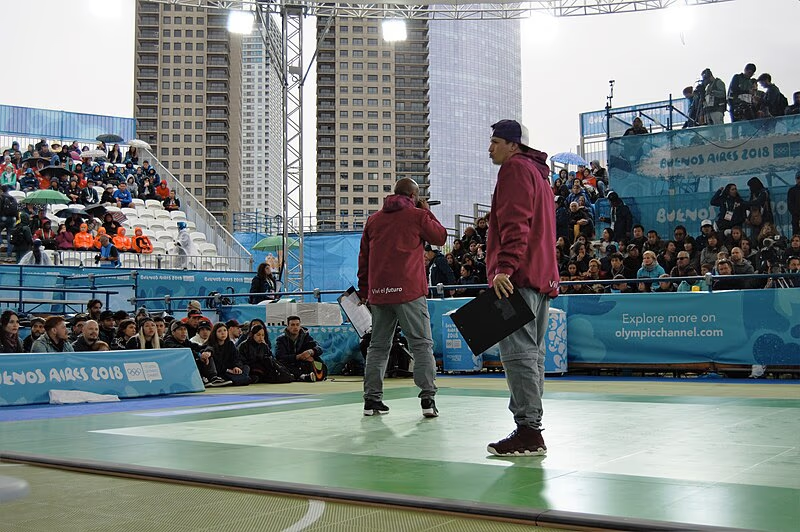
The competition battle area (also called the "cypher" or "stage") must be a clearly defined space measuring a minimum of 7 metres × 7 metres for international WDSF events and Olympic competition. For lower-tier national events, a minimum of 6 metres × 6 metres is acceptable.
The floor must be level (maximum 2mm deviation per metre), free of debris, moisture, and irregularities. It must support dynamic movements including head spins, windmills, air flares, and power moves without excessive friction burn or uncontrolled sliding.
A DJ booth must be positioned adjacent to the battle area with clear sightlines to the stage. The DJ must have professional-grade audio equipment capable of delivering consistent, high-quality sound throughout the venue.
The battle area must be illuminated uniformly with minimum 500 lux intensity to ensure all judges can clearly observe athlete movements. Lighting must not produce glare on the floor surface or cast distracting shadows.
Competitors in breaking are referred to as B-Boys (male) and B-Girls (female). Athletes compete individually in 1v1 battles.
WDSF breaking competitions at the Olympic and World Championship level use a panel of nine (9) judges. Judges are certified through the WDSF Breaking Adjudication Programme and must demonstrate expertise in breaking culture, movement vocabulary, and competitive evaluation.
Never bite another breaker's signature moves
Directly copying another b-boy or b-girl's signature moves, freezes, or stylistic vocabulary and presenting them as your own is the most serious violation in breaking culture. Influence and homage are acceptable; lifting someone's personal signature work is not. Every breaker is expected to cultivate an original style.
Originality is so central to breaking identity that crews and individuals have historically confronted biters publicly at events.
Do not cut into the cipher while someone is mid-set
The cipher (the circular performance space created by onlookers) has strict unspoken entry rules. Stepping in while another dancer is clearly mid-set is a serious breach. You wait for a natural opening — a finish, a pause, or a mutual signal — before entering.
Complete your set — never abandon a round mid-routine
Once you step into a battle or take the floor in a cipher, you are expected to finish. Stopping prematurely, freezing up visibly, or retreating mid-set signals unpreparedness and is considered disrespectful to your opponent, the judges, and the audience.
Ready to dive deeper?