


🏛️Official — NCAA
Loading OpenSourceSports…
Water Sports
7–12 players
indoor
water polo ball, cap, ear guard
7 essential rules
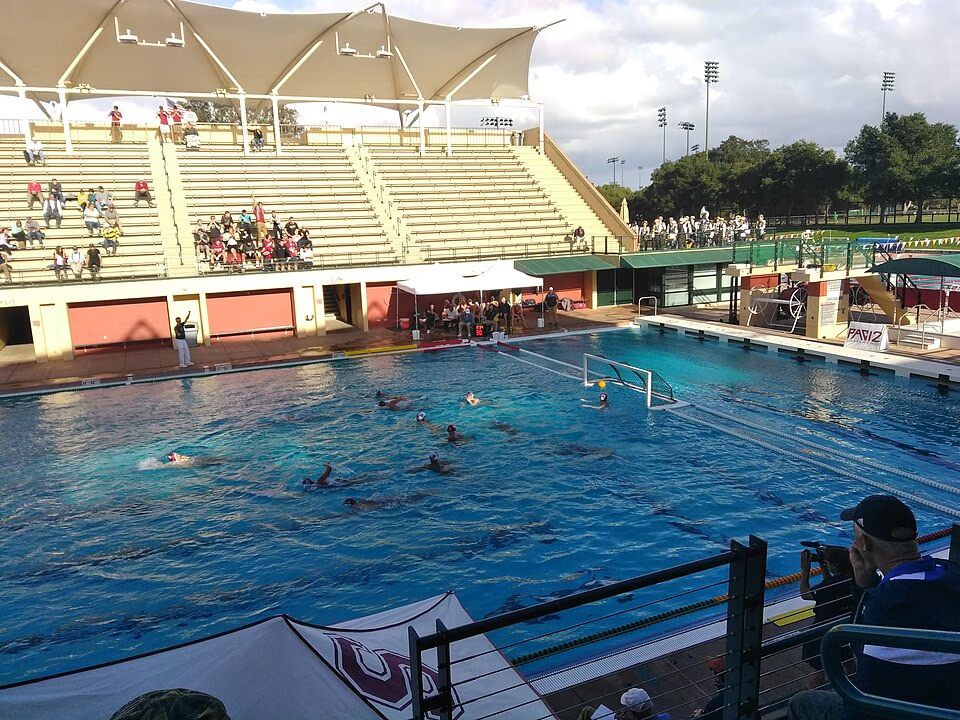
NCAA Water Polo is the collegiate variant of water polo. NCAA Men's Water Polo is contested in the fall semester (D1+D2+D3 + Eastern Athletic Association); NCAA Women's Water Polo is contested in the spring semester. The Men's NCAA Championship is the National Collegiate Men's Water Polo Champion...
Ball: yellow with grip pattern; men's circumference 68-71 cm / weight 400-450 g; women's circumference 65-67 cm / weight 400-450 g (NCAA spec); Caps: numbered, white for one team / dark for the other; goalkeepers wear red caps with the same number; Cap ear protectors required (NCAA mandate)
Field of play: 30 m long × 20 m wide for men / 25 m × 20 m for women (NCAA-spec; matches World Aquatics); Water depth: minimum 1.8 m (NCAA championship: minimum 2.0 m for safety); 2-meter line: directly in front of the goal — offensive players may not be inside without the ball
7 players per team in the water at any time (6 field players + 1 goalkeeper). Per the 2026-27 rules book, after the start of play a team may elect to play with seven field players and no goalkeeper; when a team plays without a player wearing the goalkeeper's cap, none of its players in the water ...
Game structure: 4 quarters of 8 minutes each (NCAA spec; FIVB international is 4 × 8 also for adult competition); 2-minute breaks between Q1/Q2 and Q3/Q4; 5-minute halftime; Tied at end of regulation: NCAA tournament — 3-minute golden-goal overtime periods; if needed, penalty shootout
Goal scored when the entire ball passes the goal line between the posts and below the crossbar; 1 goal = 1 point; Most goals at end of regulation/overtime/shootout wins
Ordinary foul: free throw to the offended team; minor infraction (e.g., taking the ball under, two-handed touch, holding without ball); Exclusion foul: 20-second exclusion to the penalty area; team plays short until the time expires, the opposing team scores, or possession changes hands per the r...
Water polo is a high-contact aquatic sport with significant injury risk from elbow/knee strikes, head impacts, and over-extension. Mandatory ear-protector caps reduce ear injury.
Ready to dive deeper?