
🏛️Official — FIL
Loading OpenSourceSports…
Winter Sports
1 players
both
luge, helmet, glove
10 essential rules
Luge is governed by the Fédération Internationale de Luge de Course (FIL), founded in 1957 and headquartered in Berchtesgaden, Germany. The sport operates under the FIL International Luge Regulations (ILR), updated before each competition season. With over 50 member nations, the FIL oversees arti...
The combined weight of athlete(s) plus sled is also regulated. Lighter athletes may add ballast weight (lead plates secured to the sled or worn in a weight vest) up to a specified limit.
Material: tempered steel with a specific hardness range regulated by the FIL; Runner temperature: must not exceed the ice surface temperature by more than 5°C (9°F) at pre-race inspection. Artificial heating is prohibited.; Runner profile: standardised gauge dimensions. Athletes may polish and pr...
Helmet: Aerodynamic visor helmet mandatory, conforming to FIL specifications. Full face shield required. Helmets must pass impact testing standards.; Racing suit: Skin-tight aerodynamic suit with maximum material thickness regulated to prevent concealed weight or aerodynamic modifications. Suits ...
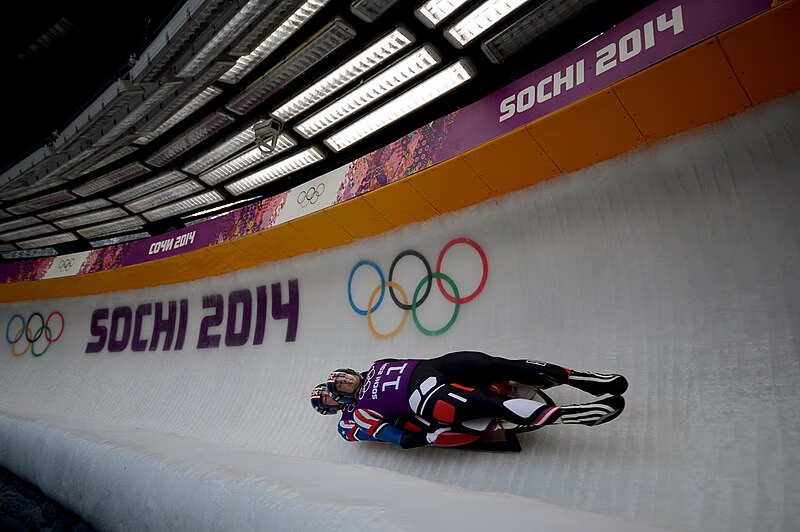
Luge competitions take place on the same artificially refrigerated tracks used for bobsled and skeleton. However, luge athletes start from different (often higher) positions on the track.
The luge start area is fundamentally different from bobsled. Athletes begin seated on the sled, gripping fixed start handles mounted alongside the track.
The finish area includes electronic timing beams that capture finish times to 1/1000th of a second (more precise than bobsled's 1/100th). A deceleration zone follows the finish, with an uphill incline and braking area to bring sleds to a safe stop.
Because luge, bobsled, and skeleton share tracks, competition scheduling requires careful coordination. Luge training and competition sessions alternate with the other disciplines.
Men's Singles: One athlete per sled. Athletes must meet minimum age requirements (typically 16 for World Cup, 18 for Olympics) and hold a valid FIL licence.; Women's Singles: One athlete per sled. Same licensing and age requirements as men's.; Doubles: Two athletes on one sled, one lying on top o...
To maintain competitive fairness, the FIL sets maximum combined weights (athlete + sled): Men's singles: maximum 115 kg (253.5 lb) combined; Women's singles: maximum 92 kg (202.8 lb) combined; Doubles: maximum 180 kg (396.8 lb) combined
Race Director: Oversees the entire competition, controls start intervals, and has authority to delay, suspend, or cancel runs for safety.; Technical Delegate: FIL-appointed official responsible for equipment inspection, runner temperature checks, and sled weight verification.; Track Chief: Manage...
Never show any positive reaction to a rival's crash or dangerous incident
Luge crashes carry real risk of catastrophic injury or death. Displaying satisfaction — however subtle — when a competitor crashes is considered deeply disrespectful and wholly contrary to the sport's culture of shared-risk solidarity.
The 2010 death of Georgian luger Nodar Kumaritashvili on the Whistler track hardened this already-existing norm into something close to inviolable.
Never interrupt a slider during pre-run mental rehearsal
Athletes spend several minutes in intense visualization before each run, mentally tracing every curve and body movement. Speaking to or physically approaching a competitor or teammate during this concentration window is considered a serious breach of respect — widely regarded as the most universally observed unwritten rule in the sport.
Mental rehearsal is central to elite luge performance; the topic is consistently raised in athlete interviews at World Cup and Olympic level.
Offer solidarity to any slider or team after a serious crash
After a dangerous incident — whether in training or competition — athletes across national teams are expected to check in on the affected slider or their coaching staff. This cross-national solidarity reflects the shared awareness of the sport's inherent risks.
The FIL circuit's small size (~100 elite athletes worldwide) means competitors know each other personally; this norm operates more like a tight-knit community obligation than generic sportsmanship.
Ready to dive deeper?