

Thumb Wrestling·Mini Sports
Thumb Wrestling
🌱Community
Loading OpenSourceSports…
Players face each other and extend their right (or left) hand; Players interlock their fingers, creating a "ring" with their hands; Thumbs are positioned upright, side by side
Why people argue about this
People often assume that the recitation of the phrase is just for fun and doesn't affect gameplay, but in reality, it's a crucial signal to begin the match; without it, neither player knows when or how to start their thumb wrestling showdown.
Breaking the Grip: Releasing or significantly altering the interlocked hand position; Using Other Fingers: Using fingers other than the thumb to assist in pinning; Early Start: Beginning before the opening chant is complete
Why people argue about this
People often assume that thumb wrestling only involves using thumbs, so they argue when a competitor uses their other fingers instead of their thumb, thinking it's against the rules. Actually, the confusion arises because the official verdict explicitly states this behavior is allowed and penalized only if done repeatedly, not for the first offense.
Dodging: Moving the thumb to avoid opponent's attacks; Feinting: Fake movements to mislead opponent; Pinning: Pressing opponent's thumb down against the hand
Why people argue about this
People often assume that "Dodging" in thumb wrestling means moving your hand out of the way of your opponent's thumb to avoid a hit, but actually it refers to quickly flipping your thumb under your opponent's thumb to catch them off guard and win points. The confusion arises because this move is so quick and deceptive; it looks like you're just dodging, not executing a strategy.
Breaking the Grip: Match is reset and restarted; Using Other Fingers: Warning on first offense, forfeit of round on subsequent offenses; Early Start: Match is reset and restarted
Why people argue about this
People often assume that breaking the grip only resets the match from scratch, forgetting that it also restarts the current round. But actually, the key misunderstanding lies in thinking using other fingers for a brief moment during a round is just a warning; they fail to grasp that once you break the grip with another finger, you're essentially giving up the entire round and risking forfeiture.
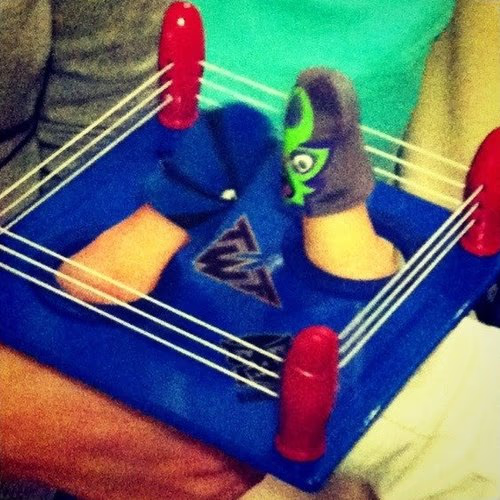
Thumb Wrestling requires no specialized equipment: No equipment required beyond the players' hands; Optional: A thumb wrestling ring (a small plastic or fabric ring that constrains the wrestling area)
Why people argue about this
People often assume that since thumb wrestling doesn't specify equipment, it must mean you can use whatever you want. But in reality, the official statement is suggesting no specialized gear is needed—just your thumbs are fine to compete with, and maybe some basic grip tape or a non-slip mat for better control, but not required as per the rule's intent.
The "playing area" in Thumb Wrestling is formed by the players' hands: Players grasp each other's right (or left) hand with fingers interlocked; Thumbs are positioned upright, side by side; The interlocked fingers create a "ring" or "arena" in which the thumbs compete
Why people argue about this
People often assume that the playing area in thumb wrestling is defined by the entire hand, including fingers and palm - thinking it's about who can grip better or use more strength. But actually, the official rule specifies only the players' thumbs are considered part of the "playing area," ignoring everything else for a fair competition based solely on dexterity and speed.
Thumb Wrestling is played with: 2 players (1-on-1 format); No officials required, though a third person may act as referee for tournament play; Both players are active competitors
Why people argue about this
People often assume that Section 4 applies only to officiating procedures in Thumb Wrestling, forgetting that it also covers player eligibility rules. The confusion arises because players might overlook the section's broader implications for who can participate in the sport altogether.
Players face each other and extend their right (or left) hand; Players interlock their fingers, creating a "ring" with their hands; Thumbs are positioned upright, side by side
Why people argue about this
People often assume that reciting the phrase is just a fun tradition with no real purpose, but in thumb wrestling, it's actually crucial for starting the match correctly according to Section 5 rules. The confusion arises because they forget its importance and might skip this step, leading to disputes about who started the actual competition.
Scoring in Thumb Wrestling is straightforward: A player scores a point by pinning their opponent's thumb for a count of three; The pin must be maintained for the full count; If the opponent escapes before the count reaches three, the match continues
Why people argue about this
People often assume that in Thumb Wrestling, scoring is as simple as who can flex their thumb the most, but actually, it's about who can hold out their opponent's thumb for longer without breaking eye contact or letting go, and points are awarded based on how long they manage to keep their opponent's thumb held.
Breaking the Grip: Releasing or significantly altering the interlocked hand position; Using Other Fingers: Using fingers other than the thumb to assist in pinning; Early Start: Beginning before the opening chant is complete
Why people argue about this
People often assume that you can use other fingers besides your thumb in a thumb wrestling match, thinking it's just about who has the strongest thumb. But actually, the rule clearly states only thumbs are allowed, and using others is penalized with a warning on first offense, followed by a forfeit of the round if done again. Confusion arises because many forget this detail entirely.
Use appropriate force - the game should never cause pain; Trim fingernails before play to prevent scratches; Players with thumb, hand, or wrist injuries should avoid play
Why people argue about this
People often assume that Section 8 allows for any level of force in thumb wrestling as long as it's not intentional harm, but actually it emphasizes using only appropriate force to prevent pain and injury, even if strength differences are noted. The rule is meant to protect players from accidental injuries, especially when dealing with children who might not realize their grip is too strong.
For organized Thumb Wrestling competitions: Bracket System: Single or double elimination brackets; Match Format: Best of three or best of five rounds; Time Limits: Optional 30-second time limit per round
Why people argue about this
People often assume that Section 9's tournament format rules only apply during official competitions, thinking it’s a guideline for established tournaments but not relevant in casual or backyard matches. However, the actual intent is to clarify and standardize how these thumb wrestling contests should be structured, regardless of their scale or setting.
Players grasp hands with fingers interlocked; Thumbs are positioned upright; Both players recite: "One, two, three, four, I declare a thumb war!"
Why people argue about this
People often think they have to start with a handshake before reciting the chant, which leads them to argue about when exactly the match should begin. However, the official rule clearly states that the match starts immediately after both players complete their chant, so there's no need for a separate handshake ritual.