

🏛️Official — NWSL
Loading OpenSourceSports…
Team Sports
11 players
outdoor
soccer ball, goal, jersey
10 essential rules
The National Women's Soccer League (NWSL) is the top division of women's professional soccer in the United States, founded in 2012 and entering its fourteenth season in 2026. The 2026 season expanded the league to sixteen clubs with the addition of two expansion sides — Boston Legacy FC and Denve...
To curb mass refereeing-protest incidents, the 2026 NWSL season operationalizes the IFAB-trial "Only The Captain" referee-protection mechanism. When the referee gestures an "X" with the arms above the head and steps back approximately four meters,...
NWSL players, staff, and venue personnel are bound by the league's Anti-Harassment Policy, Non-Fraternization Policy, and Coach Code of Conduct, all available alongside the Competition Rules & Regulations on the league's Rules & Policies hub. The ...
Each match must have at least one club physician on the bench, supported by certified athletic trainers; An emergency action plan covering on-field cardiac, head/neck, and orthopedic emergencies must be in effect at every venue; Independent league medical observers may be present for high-profile...
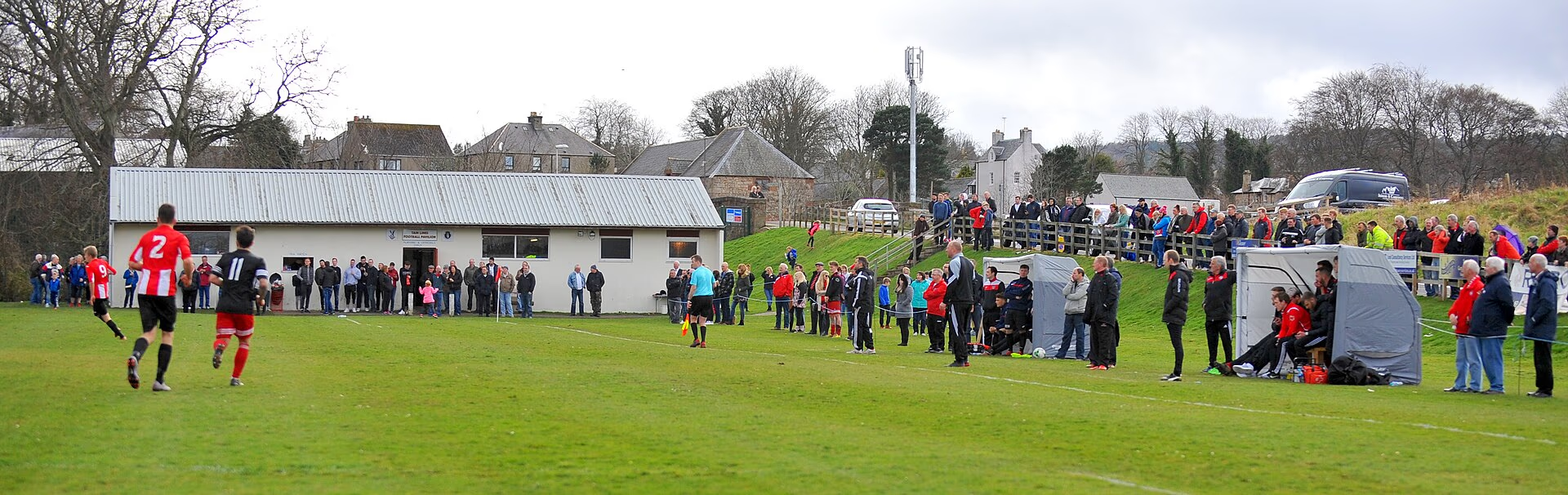
The team bench houses the nine named substitute players and a limited list of staff approved by the league, including the head coach, assistant coaches, the team athletic trainer, and one club physician. Bench staff who leave the technical area to...
Each club designates one starting captain per match who wears a captain's armband visible to the match officials. Identification of the captain is operative for the 2026 "Only The Captain" rule (Section 7), under which only the captain may approac...
The IFAB list of cautionable offenses applies, including unsporting behavior, dissent by word or action, persistent infringement of the Laws, delaying the restart of play, failure to respect the required distance at restarts, entering or re-enteri...
NWSL operates under the league's Concussion Management Protocol developed in conjunction with U.S. Soccer and the league medical staff.
For matches played in extreme heat conditions, the referee may authorize cooling breaks of up to three minutes around the 30th and 75th minutes, distinct from the half-time interval. Triggers are typically WBGT-based and managed by the league medical staff in coordination with the home club.
The IFAB Law 12 distinctions apply: ten specific offenses (kicking, tripping, jumping at, charging, striking, pushing, tackling, holding, impeding with contact, and biting/spitting) restart with a direct free kick (or a penalty kick if committed b...
The home club is responsible for ensuring the field of play meets league surface standards. Lightning detection and the league lightning policy halt outdoor activity within a defined radius of detected strikes; play resumes only after the all-clear interval has elapsed.
Ready to dive deeper?