

🏛️Official — WAF
Loading OpenSourceSports…
Never manipulate functional classification to compete downward
Deliberately presenting diminished function during classification testing to obtain a lower (more advantageous) class is the cardinal taboo of all Para competition, including Para Armwrestling. It is considered cheating of the highest order and is viewed as stealing opportunity from legitimately classified athletes.
Do not reference or mock an opponent's disability as psychological pressure
Trash talk targeting the nature, severity, or appearance of an opponent's disability is considered a serious breach of conduct. The adaptive sports community regards this as incompatible with the foundational ethos of Para competition.
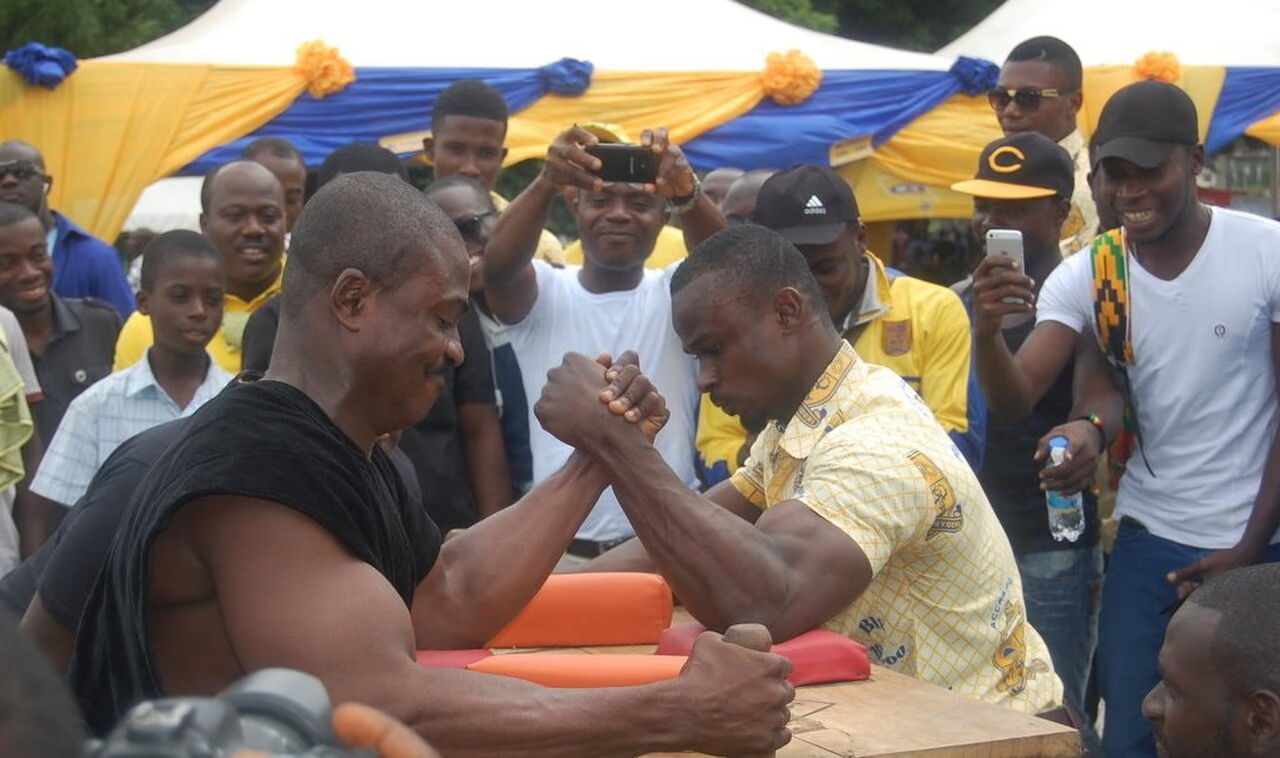
WAF-spec armwrestling table (104 cm tall × 91-93 cm long, padded elbow pads + pegs + touch pads); Adaptive seating: wheelchair-accessible table configuration; padded chair with back support for athletes who compete seated; Standard apparel: short-sleeve shirt (mid-bicep maximum); no jewelry; trim...
Why people argue about this
People often assume that Para Armwrestling tables are custom-built for each athlete, which leads them to misunderstand that they use standard WAF armwrestling tables with adaptive features tailored for different disabilities, rather than bespoke equipment designed from scratch for every participant.
Wheelchair-accessible competition floor with accessible warm-up + medical areas; Designated parallel-table layout suitable for both standing + seated athletes; Classification + medical assessment station on-site
Why people argue about this
People often assume that Para Armwrestling competitions require no special accommodations for wheelchair accessibility, which leads them to misunderstand Section 3's requirement for a designated wheelchair-accessible floor with areas for warm-up and medical assistance. They overlook the importance of ensuring all athletes can safely participate and recover after matches.
Two competitors per match; Classifications: WAF-defined disability classes for ambulatory + seated athletes (broadly: WW1-WW4 wheelchair classes, AW1-AW2 ambulatory); Weight classes follow WAF individual schedule (with potential consolidated lighter divisions in Para)
Why people argue about this
People often assume that all Para Armwrestling matches are played in a single weight class across both ambulatory and seated classifications, which leads to misunderstandings about how officials handle different abilities within these divisions. The confusion arises because weight classes are based on individual WAF schedules rather than being consolidated for simplicity or convenience.
Starting position: elbows on pads; non-pulling hand grips peg; foot on floor (ambulatory) OR seated with back-support (wheelchair); Referee centers grip + calls "Ready... Go!"; Win condition: pin opponent's hand to touch pad
Why people argue about this
People often assume that in Para Armwrestling's best of 3 rounds format, each round lasts exactly 90 seconds regardless of who wins or loses, which can lead to misunderstandings about when a match might end early if one competitor is decisively outmatched. However, the actual rule states that time limits apply only during each individual round, not throughout the entire match duration.
1 point per round won; best of 3 wins match; Tournament: single-elimination bracket with double-loss elimination (repechage) per classification; Gold/Silver/Bronze per weight class per arm per disability class
Why people argue about this
People often assume that in Para Armwrestling's scoring system, you only need to win one round out of three to claim a gold medal, but actually, it’s about winning two rounds consecutively over your opponent within those three matches to secure the title, with silver and bronze coming from the remaining wins.
Standard WAF foul taxonomy: elbow off pad, shoulder off-line, foot off floor (ambulatory) or seat-displacement (seated), false start, grip break; Anti-doping: WAF + WADA Code aligned; Classification fraud: lifetime ban
Why people argue about this
People often argue that they didn't intentionally break their grip, so why should they face severe penalties? Actually, Section 7 categorizes fouls like a grip break as carrying severe penalties regardless of intent, which can lead to confusion about whether accidental violations are still punished harshly.
Same primary injury risk as able-bodied armwrestling: spiral humerus fractures, shoulder strain, elbow ligament damage. Pre-competition medical clearance + classification-specific clearance.
Why people argue about this
People often assume that Para Armwrestling's safety considerations are less stringent than able-bodied arm wrestling simply because of its name. However, they misunderstand that the rules actually mirror those closely, ensuring pre-competition medical and classification-specific clearances to mitigate the same primary risks: spiral humerus fractures, shoulder strain, and elbow ligament damage.