

Beer Pong·Party Games
Beer Pong
🌱Community
Loading OpenSourceSports…
Teams take turns throwing ping pong balls into the opponents' cups; When a ball lands in a cup, that cup is removed from the table; The team that eliminates all of the opponent's cups first wins
Why people argue about this
People often assume that the eyes challenge is a betting round where teams bet on who will win the game based on their eye-hand coordination. However, it's actually just a way to decide who starts the first turn of the game, not determining the winner overall. The confusion arises because this initial decision-making process feels like part of the outcome itself.
Elbow Rule: A player's elbow must not cross the edge of the table during a throw; Interference: Distracting a player during their throw; Ball Retrieval: Touching opponent's cups when retrieving a ball
Why people argue about this
People often assume that elbowing is just a minor infraction in Beer Pong, thinking it's only about direct contact with their opponents' cups. However, the real issue is actually about blocking or interfering with the ball’s path when an elbow is used to disrupt the flow of play, which can be quite deliberate and intentional.
Elbow violation: Shot doesn't count; Interference: Offended team gets an extra throw; Cup touching: Offended team may rearrange their cups
Why people argue about this
People often assume that elbowing is just a minor infraction leading to an extra throw instead of realizing it's so serious it invalidates the entire throw. They also mistakenly believe cup touching only requires rearranging cups, overlooking how this can result in a complete game restart if multiple cups touch.
Ping pong balls (typically 1-2 per team); 6-10 cups per side (standard size: 16oz/473ml); Standard table (8ft/2.4m long recommended)
Why people argue about this
People often assume that only beer can be used in Beer Pong games, which leads them to believe they must use real beer bottles as cups. However, the official rule allows for substitution of beverages like soda or water, so using anything that fits within the cup size guidelines is perfectly acceptable and legal.
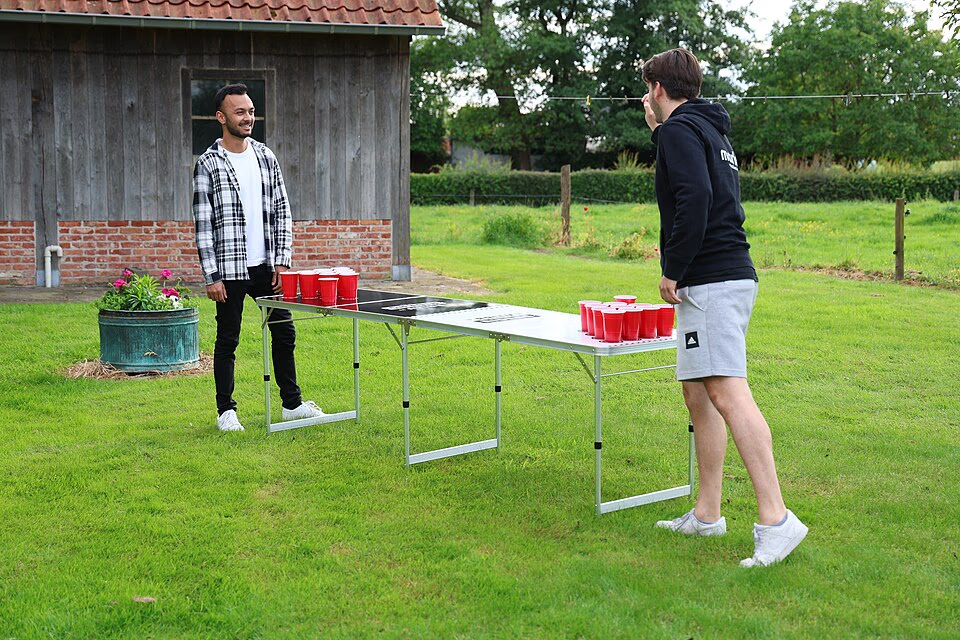
The game is played on a flat rectangular table, typically 8 feet (2.4m) long. Cups are arranged in a triangle formation at each end of the table, with the point of the triangle facing the opposing team.
Why people argue about this
People often assume that Beer Pong tables must be exactly 8 feet long, forgetting about variations in table sizes used by different teams. The official statement is clear on the length but doesn't specify other dimensions like width or height, leading to misunderstandings about what constitutes a valid playing area.
Beer Pong is typically played with: 2-4 players per team (2 is standard for competitive play); No official referees required, though tournaments may have judges; All players take turns throwing
Why people argue about this
People often assume that Beer Pong must always be played with six cups in a triangular formation for each team. However, the official verdict clarifies that while this is the traditional setup, players can choose to use any number of cups as long as they follow the game's other rules and regulations. This flexibility sometimes leads to arguments about what constitutes 'standard' Beer Pong play.
Teams take turns throwing ping pong balls into the opponents' cups; When a ball lands in a cup, that cup is removed from the table; The team that eliminates all of the opponent's cups first wins
Why people argue about this
People often assume that in an "eyes" challenge, one player simply has to look into a cup filled with beer to win, but actually, they're betting on whether their eye can hit a small target on a ping pong ball - if it does, the other team loses and must toss for first serve.
Scoring in Beer Pong is straightforward: Each cup successfully hit counts as one point; The first team to eliminate all opponent's cups wins; In tournament play, matches may be best of three or best of five games
Why people argue about this
People often assume that scoring in Beer Pong is as simple as winning a round by getting all your cups into the opponent's saucer, but actually, it’s about how many points you score per round and whether you've reached 21 points first. The confusion arises because there are different scoring systems used across variations of the game, leading to misunderstandings on what constitutes a win.
Elbow Rule: A player's elbow must not cross the edge of the table during a throw; Interference: Distracting a player during their throw; Ball Retrieval: Touching opponent's cups when retrieving a ball
Why people argue about this
People often assume that an elbow violation only disallows a shot from being valid, forgetting that it also gives the offended team an extra throw. However, they frequently overlook the fact that interference penalties result in just one additional throw for the offending side, not two as some might mistakenly believe.
Always drink responsibly and know your limits; Water can be substituted for alcohol for non-drinking participants; Ensure the playing area is clear of hazards
Why people argue about this
People often assume that the safety considerations in Beer Pong are solely about hygiene of the balls, forgetting that Section 8 also emphasizes responsible drinking practices to prevent alcohol poisoning and ensure a safer game environment for all participants.
Teams decide who goes first through a "eyes" challenge where one player from each team attempts to make eye contact while simultaneously throwing their ball into a cup; The team that makes the shot first gets the first turn
Why people argue about this
People often assume that whoever makes their shot first in the "eyes" challenge automatically gets to go first in the game, but actually, it's who misses their shot first who starts the game; they get to choose whether they want to go first or second. The confusion arises because the official rule doesn't explicitly state this detail, leading many players to interpret it differently.
Each player gets one throw per turn; In 2-player teams, both players throw in the same turn; If both players make their shots, the balls are returned and they get to throw again
Why people argue about this
People often assume that in a 2-player team, only one player throws per turn, thinking it's like individual play where each person gets their shot. But they misunderstand how teams work - both players get to throw together and can re-throw if successful, which is why the official rule clarifies this specific aspect of teamwork in Beer Pong.